Public EV Charging Costs: £100m Budget Cut Explained
Written and reviewed by Sepehr. See our editorial policy.
The Budget set aside £100 million over two years, from spring 2027, to cut the cost of public EV charging at lower-powered chargers on residential streets, which the Treasury says will save affected drivers around £150 a year on average. It also launched a taskforce to explore letting drivers use their cheaper home electricity tariff at some public chargers, an idea that could matter a great deal if you charge at home from solar. Here is what was actually announced, what was not, and what it means for public EV charging costs.
What the Budget announced for public EV charging costs
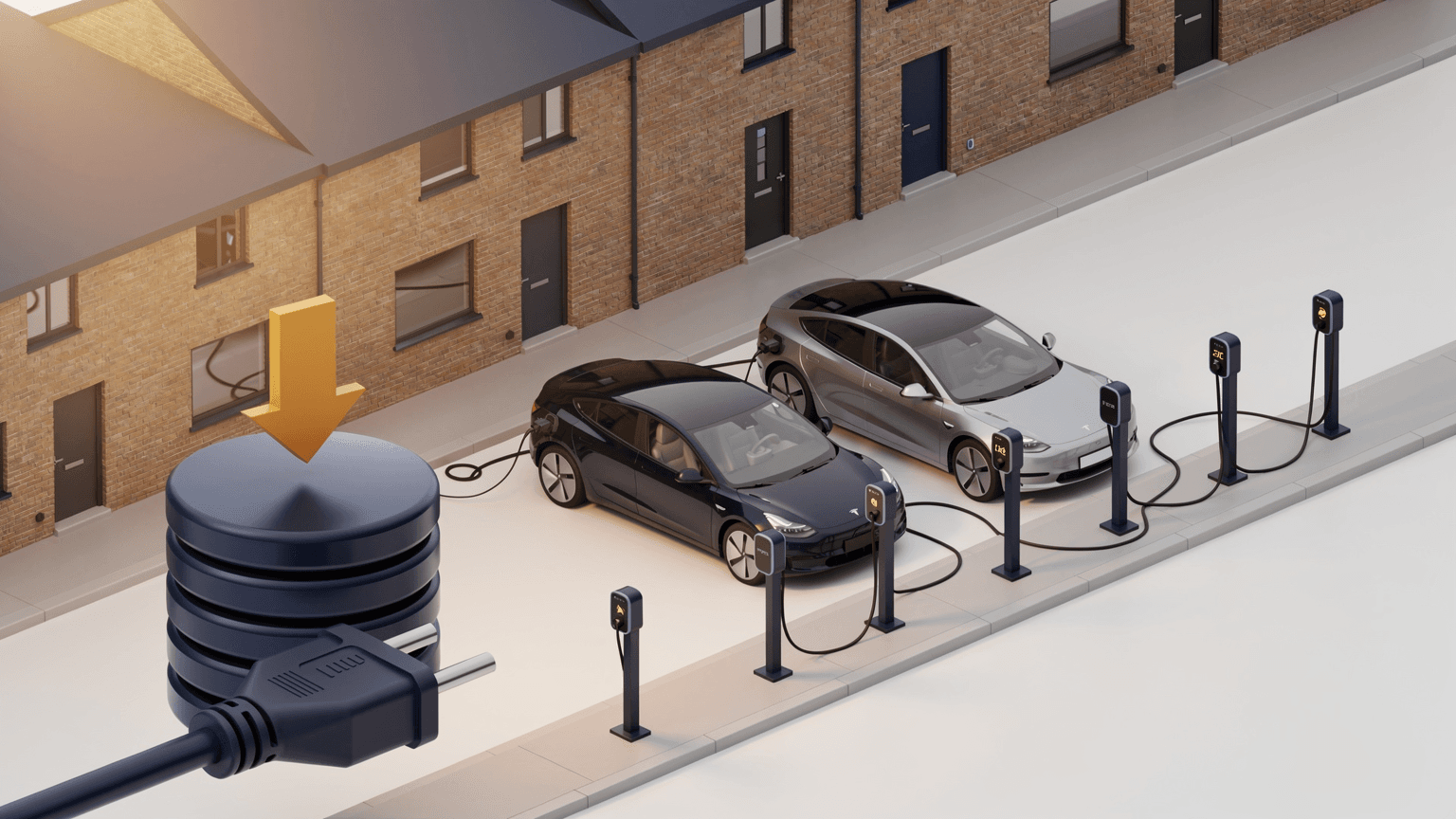
According to the HM Treasury announcement published on 28 October 2026, the government will spend £100 million over two years, starting in spring 2027, to cut charging costs at lower-powered public chargers near people's homes. These are the chargers typically found on residential streets, where drivers leave a car for several hours or overnight, and the Treasury says they make up about a third of the public network.
The headline saving is around £150 a year on average for drivers who use them. The announcement does not say how the money will be delivered, for example whether it will go to charge point operators, local authorities or drivers directly, so treat the £150 as the government's average estimate rather than a guaranteed discount. Reporting by the RAC also notes that delivery details are not yet clear.
Why the government is targeting lower-powered chargers
The Treasury points to the cost pressure on drivers without a driveway: about a third of UK households have no off-street parking, and since 2021 average real-terms prices have risen 69% at lower-powered public chargers and 94% at higher-powered ones. Those drivers cannot plug in at the cheap home rate, which makes the residential-street network the obvious place to intervene. For the wider picture on renters and flat owners, see our guide to the ability to charge consultation for renters and leaseholders.
The tariff porting taskforce
The second measure is a taskforce, led by industry experts, that will explore allowing drivers to use their cheaper domestic energy tariff at certain public chargers. The idea, often called tariff porting, follows a recommendation from the independent review of public EV charging costs announced at Budget 2025. The Treasury describes it as a complex proposal that will take time to consider, and the Department for Transport will set out more detail later. There is no start date, no list of eligible chargers and no commitment that it will happen.
If it did, the effect could be large, because home electricity is billed at a lower rate than public charging. If you also have solar panels, your home electricity is cheaper still, which is why charging an EV with solar panels remains the cheapest route for anyone with a driveway.
What did not change: VAT on public charging
There was no cut to VAT on public charging. Household electricity, including home EV charging, is at 0% VAT from 1 October 2026, now extended to July 2027, while the RAC confirms public chargers remain at the full 20% rate. The Budget factsheets also signal legislation in the Finance Bill 2026-27 to clarify that electricity from publicly accessible and workplace chargers is subject to 20% VAT and is not treated as domestic use for the Climate Change Levy, effective from 1 November. Our explainer on EV charging VAT at home versus public covers the background and the tribunal dispute.
Rod Dennis, the RAC's senior policy officer, said drivers who rely on public chargers continue to pay the full 20% VAT rate and may be frustrated that VAT was not cut on public charging.
Other changes worth knowing about
Cross-pavement chargers. From 21 October, drivers no longer need planning permission to install a cross-pavement charging solution, which the government says can save up to £300 on installation and allows charging for as little as 2p per mile. Our guide to EV charging with no driveway explains how that works.
Pay-per-mile tax. The RAC reports that the new electric vehicle excise duty (eVED) starts in April 2028 for electric and plug-in hybrid cars. Read how it interacts with solar charging in our EV pay-per-mile tax explainer.
Home upgrade loans. The same Budget introduced low-cost loans for solar, batteries and heat pumps; see our Budget 2026 energy changes for solar homes summary.
What to do now
If you can charge at home, nothing here changes your best option: a smart tariff or solar remains far cheaper than any public charger, and our EV charger grant guide shows what help is available for installation. If you cannot, expect no discount until spring 2027 at the earliest, and watch for the Department for Transport's delivery details and the taskforce's first output before assuming the full £150 will reach you.
FAQs
How much will the Budget cut public EV charging costs?
Which public EV chargers are covered by the £100m?
Can I use my home electricity tariff at public EV chargers?
Was VAT on public EV charging cut in the Budget?
Sources — verified 29 October 2026
- HM Treasury / GOV.UK, “Cutting electric vehicle charging costs” — www.gov.uk
- RAC, “Autumn Budget 2026: What it means for motorists” — www.rac.co.uk
- Highways Magazine, “Budget 2026: Fuel duty and charging relief for drivers and fleets” — www.highwaysmagazine.co.uk
- Carbon Brief, “UK budget 2026: Key climate and energy announcements” — www.carbonbrief.org

About the author
Sepehr
Solar specialist & co-founder, Smart Solar Homes
Solar specialist and co-founder of Smart Solar Homes, which works with MCS-certified UK installer partners. I write all the guides and reviews here; the aim is straight-talking education the industry rarely provides.
Citing this page? Please use a dofollow link back to the original article — it helps us keep the data on this page accurate and up to date.
Browse EV Chargers on Smart Solar Homes


Want to compare these side by side? Use the compare tool →
Or browse all EV Chargers on Smart Solar Homes.
Related reading
More on ev chargers from the editorial team.


Find installers near you
MCS-certified solar installers covering these areas.